Messages, photos and voice notes: what your wedding keepsake looks like when guests give all three
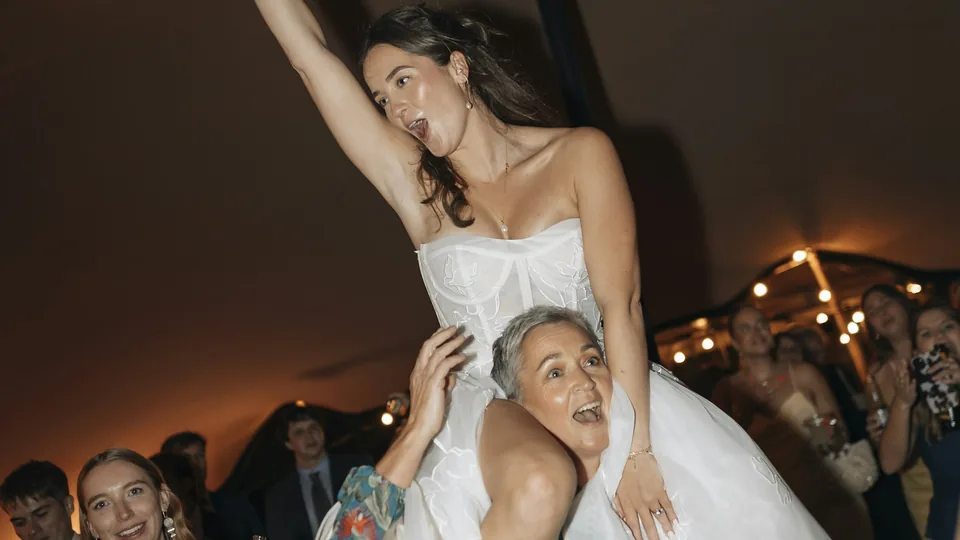
A few months after the wedding, almost everyone does the same thing: they open the photographer's gallery, go through it twice and put it away. The photos are beautiful, but they tell the day from the outside. The rest is missing: what your cousin wrote at two in the morning, the blurry photo of your friends' table, your uncle's voice saying a line only the two of you understand.
When guests leave messages, photos and voice notes, the keepsake stops being a gallery and becomes a story told by many people. This article is about that: what each format adds, and why they work better together than apart.
The written message: what someone stops to think about
Writing forces you to choose your words. That is why a written message is usually the closest thing to a short letter: a wish, a story, a piece of advice, an old joke.
The interesting thing about a message is that it ages well. Read it again in a few years and it will say exactly the same thing, in the tone of the person who wrote it. It is the part of the keepsake you can go back to and read slowly.
It is also the easiest format to steer. Put one specific question on the tables and the messages stop being "congratulations, we love you" and start being stories. You will find ideas ready to use in wedding guest book prompts.
When it works best
Written messages tend to come in the quiet moments: cocktail hour, the wait between courses, the end of dinner. You do not need to push. People just need to know where to write.
The guest photo: the angle the photographer does not have
The photographer covers the day with judgment and skill. Guests cover something else: what was happening at their table, at the bar, in the parking lot while they changed their shoes.
Those photos are imperfect, sometimes blurry, nearly always honest. They show how the wedding felt from the inside, and they often include people and moments no professional camera was pointed at right then.
They also solve a very common practical problem: guest photos end up scattered across twenty different conversations and nobody ever collects them. When they go to the same place as the messages, they stay together, next to the words of the person who took them.
The voice note: the voice is what we remember worst
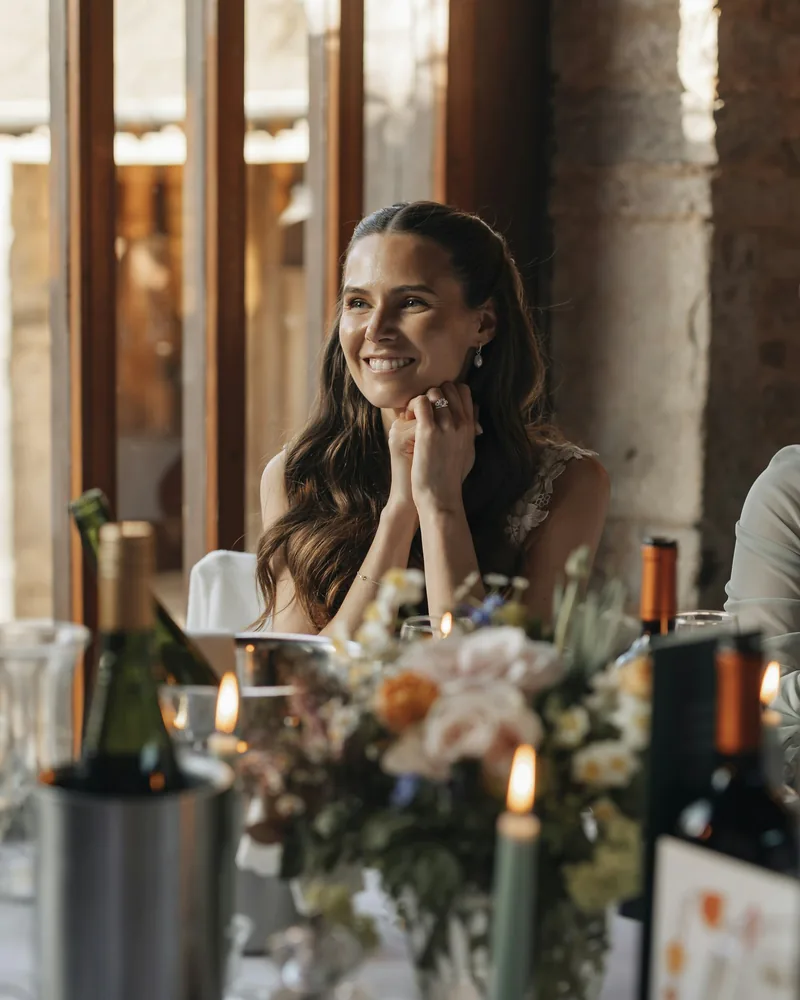
Of everything we forget, the voice goes first. We remember the face, the outfit, the place. The exact tone someone used to congratulate you fades fast.
A thirty-second voice note brings it back. It also captures what text smooths over: the laughter in the background, the music, the pause before speaking, the "I don't know what to say" that turns out to be the best part of the message.
It is the most spontaneous format too. Plenty of people who would never write three lines will happily talk into their phone for half a minute, especially with someone next to them.
Voice notes are optional
To be clear: EventGuestBook has voice notes, but they are optional and only appear if the host turns them on for the event. If you would rather have a wedding of messages and photos only, leave them off and guests will never see the option.
If you turn them on, think about where people will record. On a loud dance floor, voice notes come out badly. At cocktail hour, in the garden or lingering at the table after dinner, they come out much better.
All three together: the same moment told three ways
What changes the result is not having voice notes or having photos. It is having all three live in the same entry.
Picture a real one: a photo of four friends at their table, two lines explaining why that table ended up being the loudest at the wedding, and thirty seconds of audio in which one of them finishes the story. Apart, those are three loose files. Together, they are a memory.
That is the cumulative effect when eighty people do it: you do not get an archive, you get many versions of the same day. Yours, your parents', your college friends', the one from the people who left at three and the one from those who stayed until the end.
Why guests actually do it
The main reason is that nothing stands in the way. Guests do not install an app or create an account: they scan the QR code or open the link, write, add a photo if they want, and that is it.
That matters more than it seems. Every extra step loses people, and at a wedding people are dancing, eating or talking. Nobody is going to download anything. If you want to see how the whole thing works, we explain it in what a digital wedding guest book is.
How to ask without making it feel like homework
Three things that help and cost nothing:
- Ask for one thing at a time. "Tell us something we don't know" works better than "write a message, upload a photo and record yourself."
- Say it out loud once. A short announcement from the emcee or a friend does more than ten signs.
- Put the QR code where people are already standing still. Tables, the bar, the photo backdrop.
If voice notes are on, a mention is enough: "and if you feel like it, you can leave us a voice note too." That encourages the people who wanted to and puts no pressure on the ones who did not.
What you are left with afterward
When the wedding is over you have three layers of the same day. The messages give you back what people were thinking, the photos what they were seeing and the voice notes how it sounded. That is a lot more than a notebook of signatures or a folder of unsorted files.
And you do not have to imagine it: you can go through the experience exactly as a guest would, leave a test message and watch it appear in the book.
If you then want to see the version built for weddings, it is on the digital wedding guest book page.
Related articles
Digital guest books for wedding planners: how to offer one to your couples
An extra that adds no logistics to the wedding day if you plan it well: who creates it, when to set it up, how to show it on a screen and which plan suits each couple.
7 min
How to get guests to sign your wedding guest book
Participation is a matter of friction and timing, not nagging. What actually moves the needle before, during and after the wedding.
8 min
Wedding guest book prompts: 25 questions that get more personal messages
The problem is rarely the guest. It's the question. 25 prompts sorted by what you want to get back, and the one rule that matters: pick just one.
8 min