Your wedding photographer can't be everywhere
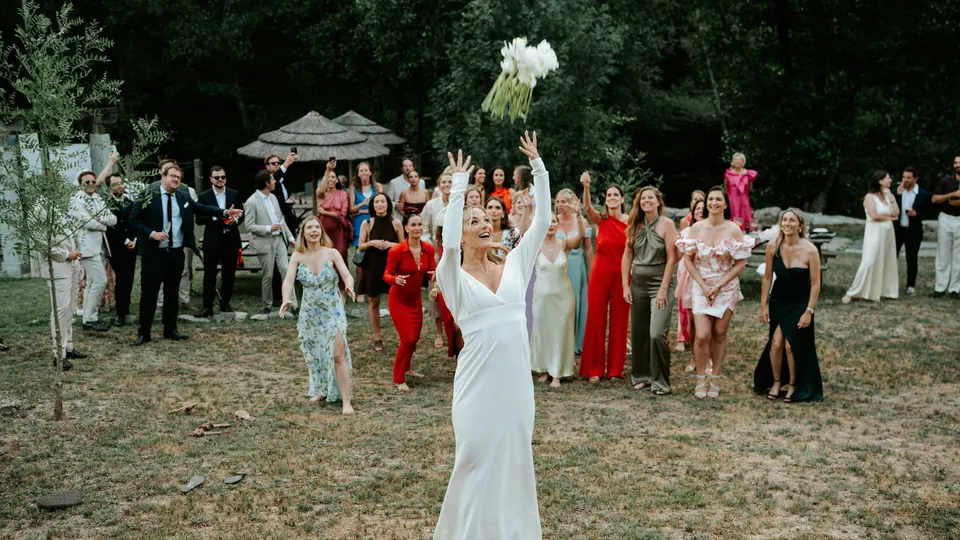
Let's be clear from the start: hire a good photographer. Really. Don't leave your wedding photos to the nephew with a nice camera.
But your photographer, however good, is one person. And while they're shooting the ceremony, at table seven your grandmother is laughing with your father-in-law in a way you'll never see again.
Someone has that photo. You only have to ask for it the right way.
The photographer does a job your guests can't do
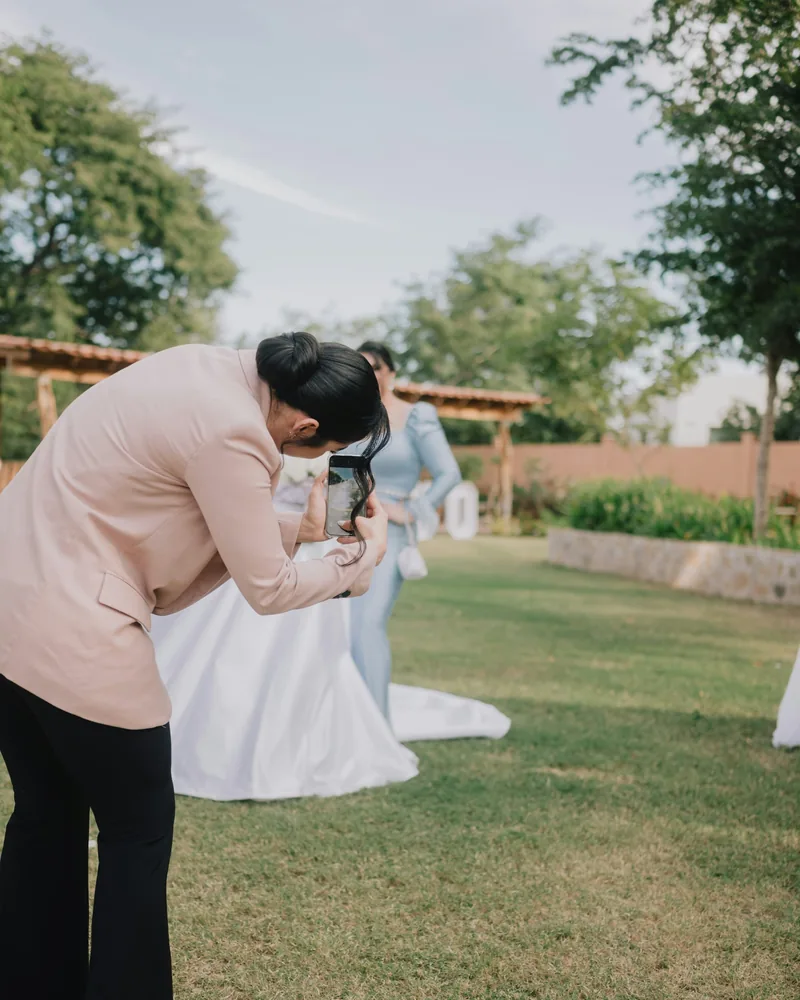
Wedding photography isn't showing up with an expensive camera and pressing a button. A professional reads the light, anticipates moments, knows where to stand without blocking anyone and makes decisions in seconds. Then they select, sequence and edit hundreds of images so the day has a story.
They also carry a huge responsibility: the kiss doesn't get repeated because the focus missed. The processional, the exchange of rings, the hug with your parents and the couple portraits need judgment and craft.
That's why wedding guest photos aren't a cheap alternative to a photographer. If someone sells you the idea that way, be wary. They're another layer of the memory. More uneven, more intimate and sometimes wonderfully absurd.
Your photographer will give you the pictures you frame. Your friend can give you the one you keep because she knows exactly what was happening outside the frame.
What the professional usually captures
Every photographer works differently, so ask yours which moments they cover and for how many hours. Full coverage usually includes:
- Getting ready, for one or both of you.
- The ceremony and its key moments.
- Couple portraits and organized family photos.
- The arrival at the reception.
- The atmosphere at cocktail hour and the decor details.
- Speeches, toasts, surprises and the first dance.
- A selection of guests and candid scenes.
It looks like everything. It isn't, because a wedding doesn't happen in a straight line.
While the couple is having portraits taken, friends are finding each other at cocktail hour. While the photographer concentrates on the speech, two tables back someone is hugging a cousin they haven't seen in ten years. While they look for the best angle on the dance floor, six barefoot friends are organizing a photo on the terrace.
One person can tell the story of the day very well. They can't be in every corner of it at once.
The moments only your guests have
This is the fun part. We're not talking about a hundred and fifty versions of the ring exchange. We're talking about what happens when nobody feels watched.
The wait before you arrive
You aren't there yet, and things are happening. Your uncles take a picture at the door. A friend from out of town finally meets the group he's heard about for years. Someone tries to fix a boutonniere with a safety pin.
It's the part of the wedding you never see. And it tends to be full of great little scenes.
Each table's own life
A photographer comes over, takes a few shots and moves on. The phones stay. They catch the first toast, the napkin turned into a hat and everyone's face when they find out who wrote the note hidden under the plate.
Table seven doesn't need a photo shoot. It needs the cousin who photographs whatever makes her laugh.
Hallway conversations
Running into your old teacher, the hug by the restrooms, the grandparents chatting in the sun. These are moments with no schedule and no warning. They happen at the edges, which is exactly where many weddings become personal.
The last stretch of the party
Your photographer's coverage may end before the celebration does. That's normal and should be clear in the contract. After that come the abandoned shoes, the last dances and the small group that refuses to leave.
The aesthetics get worse and the truth gets better. I say it with love: some of the photos that will make you laugh hardest fifteen years from now will be crooked.
The day seen from the inside
The professional observes with a storyteller's intent. A guest photographs from within a relationship. Your sister knows why that laugh matters. Your coworker recognizes the joke behind a look. The picture may not explain it to anyone else, but it does to you.
Phones, yes, but not in front of the photographer
A sensible limit is needed here. Collecting guest photos doesn't mean turning the ceremony into a wall of screens.
Many photographers ask guests to put their phones away during the processional, the rings and the recessional. Plenty of couples call this an unplugged ceremony, and they're right to. A raised arm can block an unrepeatable expression, spill into the aisle or show up in every professional shot. Besides, experiencing the moment through a screen is a pretty poor deal.
You can frame it like this:
-
Ceremony and directed moments: phones away. Let the professional work and ask your guests to watch with their own eyes.
-
Cocktail hour, tables and party: candid photos welcome. Here the perspectives multiply without blocking the official coverage.
-
No chasing the couple to redo scenes. Guest photos work best when they follow what's already happening.
-
When in doubt, the photographer decides. You hired their experience. Don't let a QR code become an invitation to step into their frame.
This kind of coexistence is far nicer than choosing between "no phones at all" and "everyone photographing everything." There are moments to be present and moments to save a picture.
How to collect those photos without bothering anyone
The worst option is asking people to show them to you during the wedding. You shouldn't spend cocktail hour accepting transfers or checking who has uploaded what. A friend doesn't need to become a folder administrator, either.
Set up the system beforehand:
1. Create a single way in
A digital guest book for events lets each guest scan a QR code, write from their browser and add a photo. No app to download and no sign-up.
The platform optimizes pictures when they're uploaded. Its value is in keeping them with their message and preventing them from being scattered across chats, emails and folders.
2. Keep the QR code away from the ceremony
Put it on the tables, by the photo backdrop, at the bar or in the lounge area. The place itself then suggests when to use it. I'd avoid a sign encouraging people to take out their phones right at the ceremony entrance. The message you want to send there is the opposite.
3. Ask for scenes, not quantity
A line like "Share a moment you think we didn't see" guides people much better than "Upload all your photos." It invites them to choose and helps bring in pictures with a story.
Try one of these challenges:
- The most contagious laugh at your table.
- A reunion that deserved a photo.
- The detail you liked most.
- The couple seen from where you're sitting.
- Whoever was still standing at the end.
There are more in these ten wedding guest photo ideas.
4. Share the link the next day
The QR code works in the room. The link does the final sweep. Send it with a short message, no guilt and no six-hour deadline:
Thank you for being with us yesterday. If you took a photo you like, you can leave it here with a message. We'd love to see the wedding from where you were sitting.
For the whole process, here's the full guide on how to collect wedding photos from your guests.
What photographers themselves tend to say
They don't all feel the same about phones. Some prefer a fully unplugged ceremony. Others don't mind as long as nobody blocks the aisle, uses a flash nearby or interrupts a scene. That difference matters: talk to yours.
Where they usually agree is on something very reasonable. A guest shouldn't compete for the same instant or direct a second shoot next to the professional one. When they try to get "the same photo," they usually get in the way. When they photograph their table, their friends and what's going on around them, they contribute material the official coverage doesn't aim to capture one by one.
Tell your photographer you'll have a QR code for collecting candid shots and ask whether they'd like you to pass on any rules. That two-minute conversation prevents misunderstandings. It may even help you decide where to place the signs so they don't encourage phones at delicate moments.
And remember: guest photos don't need to look professional. Judge them by that standard and they'll always lose. Their value lies in who was there and why they raised their phone at that exact moment.
Two albums, two ways to remember
When you receive the professional photos, set aside an evening to see them properly. Big screen, something to snack on and zero notifications. It's the carefully told story of your wedding.
Then open your guests' photos. That's where the corners appear: the shuttle ride, the tables, the bar, the trip home. If they arrive with messages, you'll understand scenes that would otherwise be one more file.
Don't mix the two to decide which is "better." One has authorship, technique and editing. The other has many voices. Together they look more like the day you lived.
Frequently asked questions
Do guest photos replace the wedding photographer?
No. The professional is responsible for the essential moments and builds a coherent set of images. Guest pictures complete the story with informal scenes and different points of view.
How do we keep phones from ruining the professional photos?
Ask guests to put them away during the ceremony, the processional, the recessional and any directed moments. Encourage photos at cocktail hour, at the tables and at the party, where they interfere far less.
Should we tell the photographer there will be a QR code?
Yes. You don't need permission to collect your guests' memories, but knowing their preferences helps you decide where to place it and what to say about phone use.
Which photos are worth asking for?
The ones that show something the couple didn't see: guests getting ready, life at the tables, reunions, details and the end of the celebration.
Do guests need to install anything?
No. They scan the QR code and open it in their browser. They can leave a message and add a photo.
Where does the QR code go so it doesn't disturb the ceremony?
At the reception: the tables, the photo backdrop, the bar or the welcome table. Avoid featuring it where you want people to keep their phones away.
How do we get the photos after the wedding?
Send the same link by text or group chat the next day. Anyone who didn't upload during the party can do it at their own pace, without flooding a group with messages.
Your photographer tells the story of the wedding. Your guests tell its corners.
Hire someone whose work moves you and give them room to do it well. Then open a door so everyone else can hand you what they saw from their seat.
You can create an event for free, test the QR code with two people and decide whether that second point of view has a place at your wedding. I think it does. Mostly because of table seven.
Related articles
Digital guest books for wedding planners: how to offer one to your couples
An extra that adds no logistics to the wedding day if you plan it well: who creates it, when to set it up, how to show it on a screen and which plan suits each couple.
7 min
Messages, photos and voice notes: what your wedding keepsake looks like when guests give all three
A message tells you what someone thinks, a photo shows how it felt and a voice note gives you their voice back. Here is how your wedding keepsake changes when guests leave all three.
8 min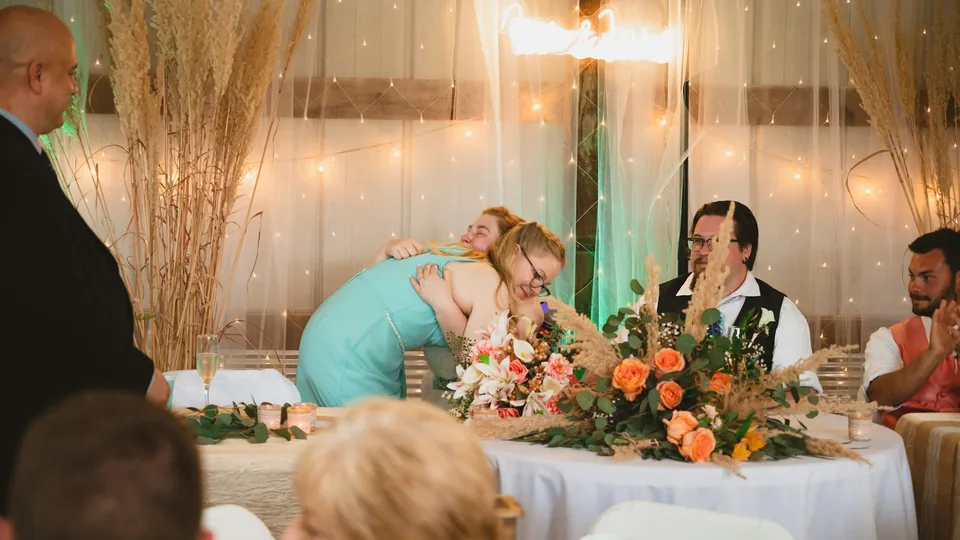
How to get guests to sign your wedding guest book
Participation is a matter of friction and timing, not nagging. What actually moves the needle before, during and after the wedding.
8 min